Listen to Post 2 of This 3-Part Series: Audio version
Beyond the Label – Mental Health, Learning, Performance & Identity
There is a particular kind of silence that a child carries when she stands at the front of a classroom and cannot do what everyone else around her seems to do so effortlessly.
Adunola was five, maybe six years old – sitting in a Nigerian classroom after the afternoon break when her teacher walked to the chalkboard and wrote out the alphabet. Before Adunola could even focus her eyes, the teacher’s long pointing stick swung in her direction.
Come. Come up here. Recite this.
She walked to the front. She stared at the letters. She stared for what felt like a very long time. Then she looked at the floor.
When she finally sat back down in her seat, having said nothing, every other child in the class was called up one by one. Each of them recited the alphabet with ease. Some seemed almost excited.
“Right there, as a five- or six-year-old,” she recalls, “I was wondering, ‘What’s wrong with me?'”
What Nobody Said
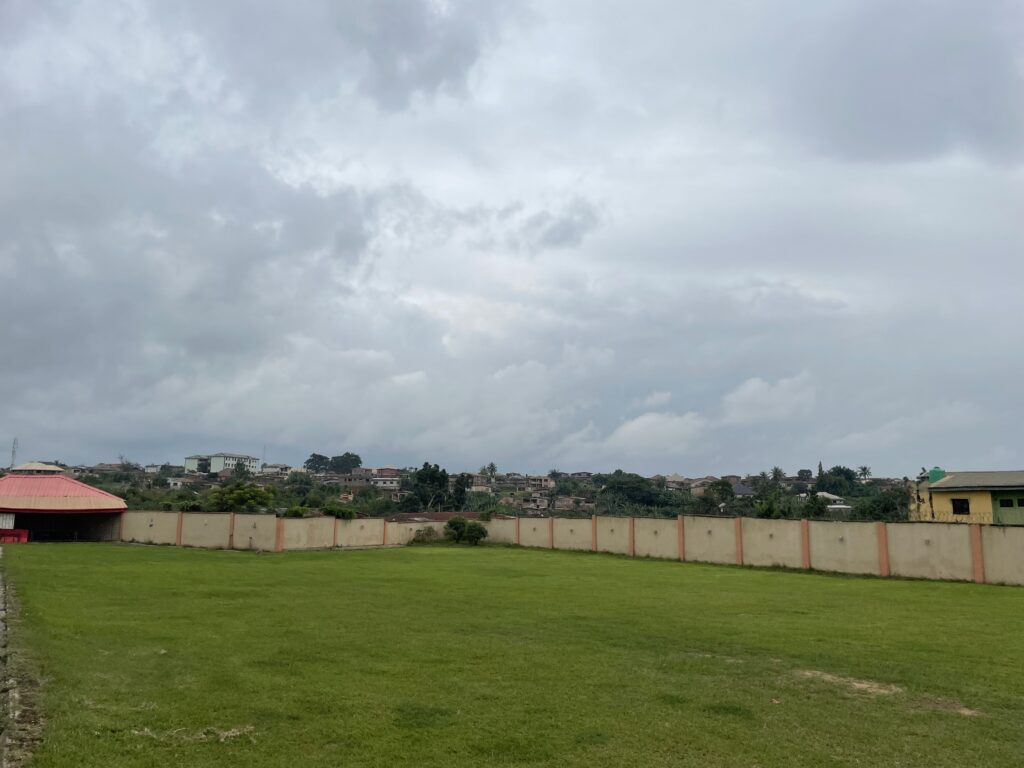
Growing up in Nigeria, Adunola didn’t have the language for what she was experiencing. Nobody around her did.
She was not lazy. She was not spiritually afflicted. She was not stupid.
She had dyslexia – a neurological difference that affects the way the brain processes written language. But in the schools she first attended, that distinction simply did not exist. There was one framework: you could read and write, or you couldn’t. And if you couldn’t, the consequences could be brutal.
She remembers standing at a teacher’s desk during a reading test, unable to attempt a single question, watching classmate after classmate come and go while she remained frozen beside the table for nearly an hour and a half. She remembers the shame of being called out in front of the class, being unable to answer, and hearing everyone told to chant the word. Every day. Sometimes three times before she got home.
“It could be said to me like three times in a day before going home. Shame. Shame. And imagine going through that every single day of the school week.”
Her body knew it before her mind could name it. As she got close to school each morning, she said her blood pressure would rise. Sometimes she would start crying before she even reached the gates. School was never a place she wanted to be – not because she didn’t want to learn, but because of what happened to her there.
The Cost of Being Neurologically Different
The abuse she experienced was not subtle.
There was an exam – she was about eight – when a teacher deliberately seated her next to the brightest student in class. The expectation was clear: copy. Adunola refused. She had, she says, too much integrity instilled in her by her mother. “Even if it was just the letter A that I could do, I wanted to write my own A.”
When the teacher realised she wasn’t copying, she struck her on the head. Hard enough to draw blood. Hard enough that he had to find tissue paper to clean her arm before she could go back to her seat.
She went home. Her mother noticed fingerprints on her cheek. “Who slapped you?” “My teacher.” And that was how it would go – Adunola staying quiet, trying to protect something she couldn’t even name, until the marks on her body did the talking for her. Her mother began accompanying her to school.
But the moment that stands out most to me is this one.
A teacher sat in front of Adunola’s mother and told her – with Adunola sitting right there, listening – that her daughter had a spiritual problem. That no school could help her. That she needed deliverance.
Her mother, who loved her fiercely but didn’t have the educational background to push back, believed him.
Adunola was pulled out of school. For weeks. While her classmates continued their education, she sat in church. The adults around her were trying to pray away something that was simply the way her brain was wired.
“Imagine what was going on in my mind,” she says quietly, “when I was in church for weeks and my peers were in school.”
I want to let that land. Because this was not the 1950s. This was a child’s actual lived experience – the erasure of her right to an education, dressed up as spiritual care.
The School That Finally Saw Her
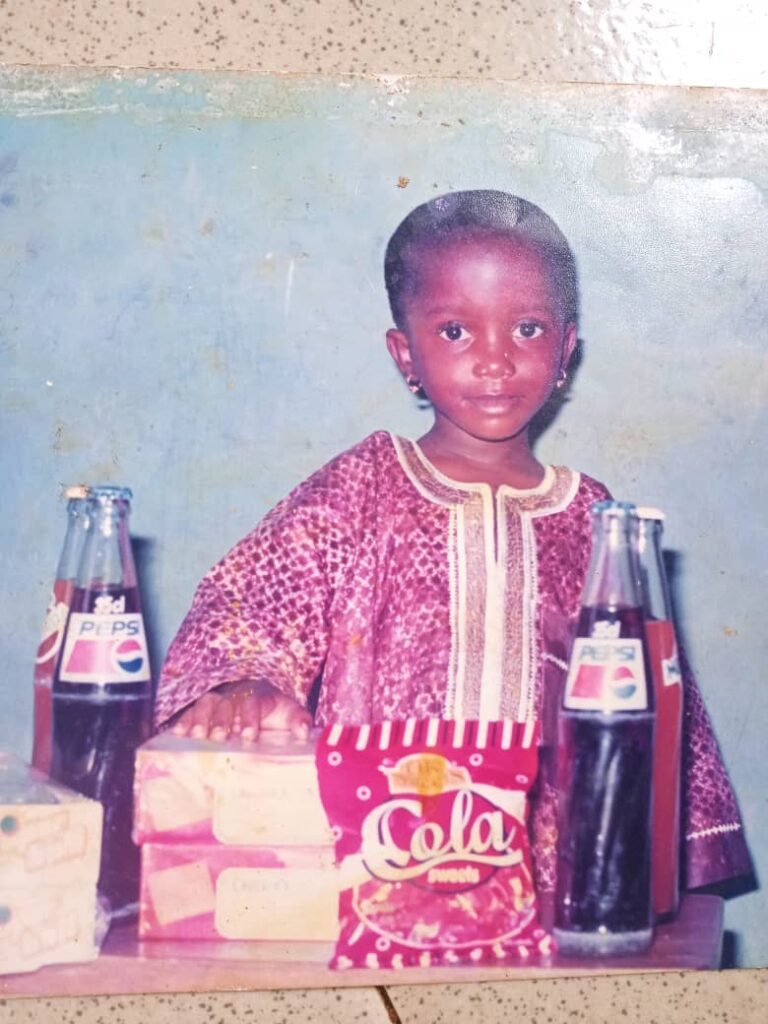
By the time Adunola was nine or ten, she had been rejected by multiple schools. And then, through what she doesn’t hesitate to call God’s grace, her family found a school that understood learning differences. Word in the community was that if any child was struggling, that was the school to go to. The staff weren’t surprised by her profile. They had seen children like her before. They had a name for it.
Dyslexia.
They told her parents it would be painful but necessary: Adunola needed to go back to the beginning. She was in Primary 4. They placed her in Primary 1. She needed a foundation – a real one. One built on structured literacy: a systematic, evidence-based approach to teaching reading that works with the brain rather than against it.
Within one month, Adunola could read.
One month. After years of beatings and shame and church and silence.
“They gave me the foundation,” she says. “But I took it from there.”
And she did. She began to understand how her brain worked. She developed her own strategies. She stayed late. She went over material again and again. She poured an intensity into her studies that never left her.
The Weight That Reading Doesn’t Lift
Here is something I think about a lot as both an educator and someone who has navigated this myself: intervention is not a cure. It’s a beginning.
Even after Adunola learned to read and write, she was not okay. Years of being shamed in front of classrooms, isolated from peers, and told she was broken in ways that no teacher could fix – that doesn’t evaporate when a child starts sounding out words. It settles into the body. It changes how you hold yourself in a room.
“People thought I was an introvert,” she says. “I was not actually an introvert. It was the dyslexia that made me quiet.”
In secondary school, she was coming first in her class consistently. But she sat in corners. She didn’t speak to classmates. Teachers would mark her work and be astonished by it – who is this girl? – and then discover it was the quiet one in the back who never said a word. Her academic performance became the only tool she had for proving she existed.
She struggled socially in ways that went well beyond shyness. Years of public humiliation had trained her brain to shut down under the gaze of others. Working memory difficulties compounded by anxiety meant that she would stand in front of a crowd and forget everything she wanted to say. She wanted to connect with people – but the way she had learnt to feel about herself made it hard to believe anyone would want to connect with her.
“I was still feeling isolated,” she says, “even though I was doing well.”
These are the effects that no reading programme addresses. These are the effects that can follow a person into every room where they are expected to take up space.
The University That Changed Everything

Adunola applied to the University of Ibadan – one of the most prestigious universities in Africa. She got in with a score of 50. The minimum. She sat in her first semester convinced that every single person around her was smarter, better prepared, and more deserving of being there.
She was wrong.
By the end of that first semester, she was first in her class. By graduation, she had become the best graduating student of the entire University of Ibadan.
She didn’t even know what BGS – Best Graduating Student – meant until the morning of her own graduation, while someone was doing her makeup. The person applying her foundation looked at her and asked, ‘How did you get the BGS from the university? ‘ Adunola had to ask what it stood for.
“I was not actually aspiring to come first,” she says. “I just knew I had to put in the extra.”
That line. That is the line.
She wasn’t aiming to be the best. She was just refusing to be defeated. And what emerged from that refusal was extraordinary.
This achievement restored something in her. Not everything – healing is rarely that tidy. But something fundamental shifted. She began to feel, perhaps for the first time, that she belonged in every room. That her mind was not broken. That she was, in fact, exceptional.
She calls herself a dyslexia achiever. A deliberate reframing of what the label means. Not a diagnosis to overcome, but a difference to understand.
This is Post 2 of 3. Post 3 The Dyslexic Achiever: What She Built Beyond Survival
Post 1: She Faced Reading Challenges – Then Became Her University’s Best Graduate.
Post 2:When Dyslexia Was Mistaken for a Spiritual Problem
Post 3: The Dyslexic Achiever: What She Built Beyond Survival
If this moved you, share it – especially with a parent, teacher, or anyone working with young people. And if you recognise something of yourself or someone you love in this story, I’d really like to hear from you in the comments.
Discover more from Thrive Beyond Labels
Subscribe to get the latest posts sent to your email.