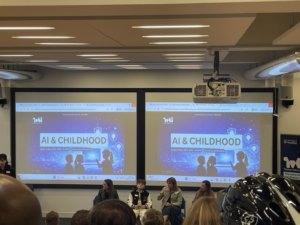
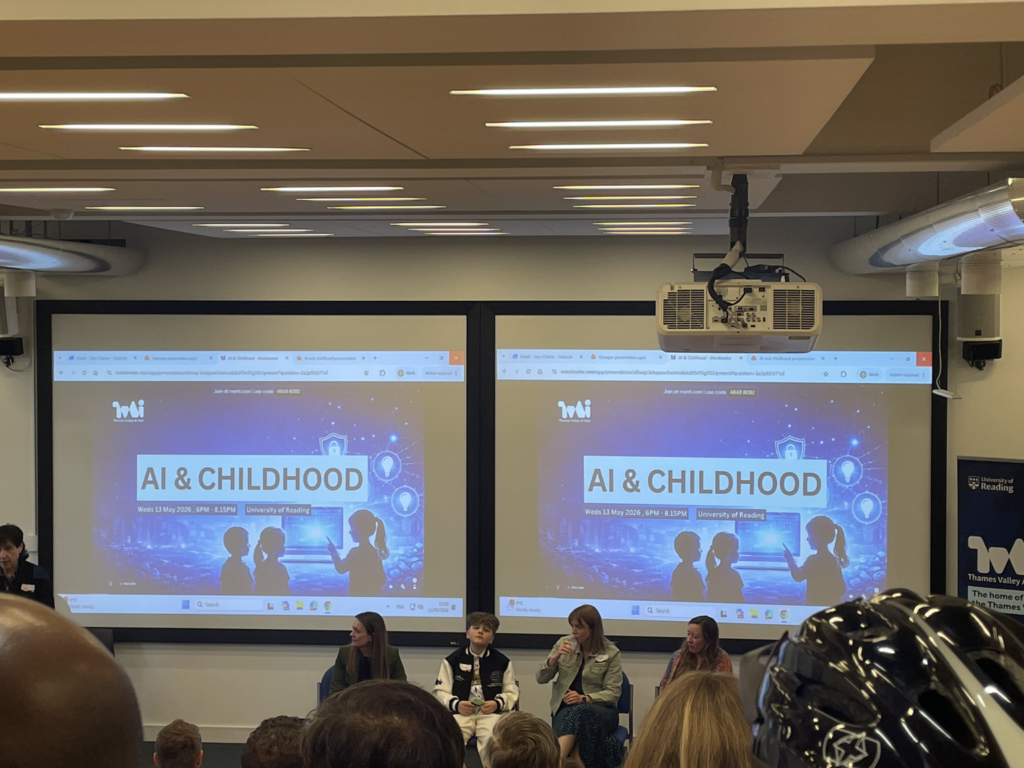
Over the past few months, I’ve attended two events that have shaped the way I think about artificial intelligence in education: a panel discussion on AI, education and childhood at the University of Reading, hosted by the Thames Valley AI Hub, and a thought-provoking session at the Wonderful Summit, led by Kevin Bennett, CEO of Premier Christian Radio, titled Creativity in the Age of AI.
Both events left me with plenty to reflect on. Since then, I’ve found myself returning to many of the conversations while observing how AI is increasingly shaping learning, work and everyday life.
These are simply my personal reflections based on what I’ve been learning, observing and experiencing. They’re not presented as definitive answers, but as an invitation to think about how we can use AI wisely.
Whether we like it or not, AI is no longer a futuristic concept. It’s already transforming education, workplaces and everyday life. The question is no longer whether we should engage with AI, but how.
One comment from Kevin Bennett particularly resonated with me. He encouraged us to see AI as something to leverage to become more productive, not something that replaces our thinking altogether.
That distinction matters.
As an educator, I’ve been exploring tools such as ChatGPT, Claude, Canva AI and Google Gemini. They’ve helped me generate lesson plans, differentiate resources, simplify complex concepts, draft communications and save valuable planning time. Used well, AI gives me more time to focus on what matters most, supporting learners.
Perhaps nowhere is AI’s potential more exciting than in supporting learners with dyslexia.
I’ve seen students with brilliant ideas struggle to organise those ideas into coherent writing. AI can help structure thoughts, improve grammar and spelling, simplify information, explain concepts in different ways and reduce unnecessary barriers to learning. For many learners, these aren’t shortcuts. They’re accessibility tools that enable them to communicate what they already know.
I recently saw a learner who struggled to organise their ideas use AI to structure a piece of writing. The thinking remained their own, but AI helped remove the barrier that had previously prevented them from expressing it clearly.
But accessibility should never become dependency.
AI can help us think more clearly, but it shouldn’t think for us.
Like any technology, AI has limitations. At a CBF event, I was reminded that AI can “hallucinate”, confidently presenting inaccurate, outdated or completely fabricated information. It can also reflect biases found within its training data.
That’s why fact-checking remains essential.
Whether we’re researching history, conducting scientific investigations or making important decisions, we should continue comparing multiple sources, consulting experts and applying critical thinking. AI should spark our curiosity, not replace our research.
I’ve also become convinced that prompt engineering and AI literacy are becoming essential life skills. The quality of AI’s responses often depends on the quality of the questions we ask. Institutions should be helping young people understand not only how to use AI, but how to question it, verify it, recognise bias and use it ethically.
One of the greatest risks I see is what is called “digital fast food.”
AI can generate essays, presentations and answers within seconds. That’s impressive, but learning has never simply been about reaching the answer as quickly as possible.
Real learning requires curiosity.
It involves making mistakes, wrestling with ideas and developing understanding over time.
Efficiency is valuable.
Understanding is essential.
AI is an extraordinary tool, but tools should serve humanity, not replace the habits of thinking that help us grow.
AI will continue to evolve. The real question is whether we will equip the next generation with the wisdom to use it well.
Perhaps the greatest opportunity before us isn’t simply teaching children how to use AI. It’s teaching them when to use it, when to question it and how to think critically.
As educators, caregivers and leaders, we have an opportunity to shape a generation that embraces innovation without losing curiosity, critical thinking and wisdom.
I’d love to hear your thoughts. How are you using AI in education, work or everyday life? What opportunities and challenges have you observed?
In my next reflection, I’d like to explore another question that has been on my mind: what happens when children begin turning to AI, not only for homework, but also for advice about life?
Discover more from Thrive Beyond Labels
Subscribe to get the latest posts sent to your email.