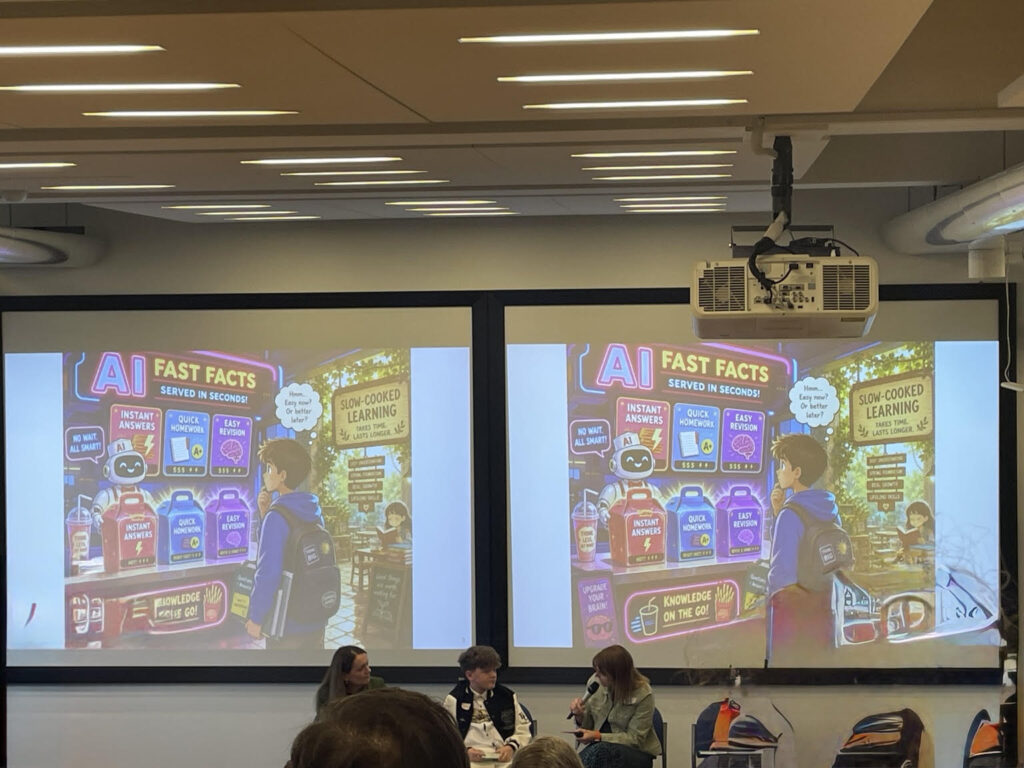
Artificial intelligence is rapidly becoming part of everyday childhood.
Children are using it to help with homework, explain difficult concepts and answer questions in seconds. For many families and educators, AI is becoming another learning tool alongside books, teachers and the internet.
But one recent report from UNICEF made me pause.
Based on data from 10 countries, UNICEF estimates that at least 20 million children have already used AI, with young people adopting the technology at rates more than three times faster than adults. Even more strikingly, around one in ten children-an estimated 2 million-reported turning to AI for advice about things that worry them, while approximately 13 million said they use AI to support their learning and homework.
Those findings made me stop and think.
On one hand, I understand why.
AI is available 24 hours a day. It doesn’t become impatient. It can explain concepts in different ways, simplify complex information and provide support when a parent, teacher or tutor isn’t immediately available.
In many ways, that’s an incredible opportunity.
Yet it also raises important questions.
If children are increasingly turning to AI for advice, how do we ensure they continue to seek wisdom from parents, teachers, mentors and other trusted adults?
Information and wisdom are not the same thing.
AI can provide information, summarise knowledge and generate suggestions.
It cannot replace lived experience.
It cannot model compassion.
It cannot build trust.
It cannot love.
As someone of Christian faith, I’ve also reflected on what this means spiritually.
Throughout history, every generation has developed tools that have transformed the way we live. AI may be the most sophisticated tool humans have ever created. But the question isn’t simply whether we should use it. The deeper question is whether we allow it to shape where we seek wisdom, identity and guidance.
I’ve noticed that many people now give their AI assistants names. Increasingly, people ask AI not only factual questions but deeply personal ones.
That doesn’t necessarily mean something is wrong.
But it does remind us how important human relationships remain.
From a Christian perspective, wisdom ultimately comes through God, discernment, community and relationships. AI may generate convincing responses, but it does not possess a conscience. It cannot pray. It cannot experience empathy. It cannot replace the work of the Holy Spirit or the encouragement that comes from walking alongside another person.
Technology should remain a servant – not become an object of dependence.
This isn’t a call to fear AI.
Far from it.
AI has enormous potential to improve education, increase accessibility and help people overcome barriers to learning. I’ve seen that potential first-hand, particularly for learners with dyslexia.
But as AI becomes increasingly embedded in childhood, our responsibility grows too.
We need to help young people understand both its strengths and its limitations.
We need to teach discernment alongside digital literacy.
And perhaps more importantly, we need to invest in the relationships that no technology can replace.
Perhaps the greatest challenge of the AI era isn’t teaching machines to think more like humans.
It’s ensuring humans continue to think deeply, seek wise counsel, value meaningful relationships and remain fully human in a world where answers are becoming increasingly instant.
I’d love to hear your thoughts.
How are you helping the young people around you engage with AI wisely?
Discover more from Thrive Beyond Labels
Subscribe to get the latest posts sent to your email.