An educator’s perspective on helping young people in the diaspora thrive in UK education
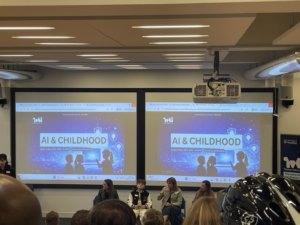
Last weekend, I had the privilege of leading a discussion at a women’s retreat – a room full of mothers, aunties, sisters and pastors, many of whom had moved to the UK from Nigeria in recent years. The topic was close to my heart: how to support our young people to thrive in an education system that can feel, at first, like a foreign language.
I opened with a simple question – what surprised you about the UK education system? – and the room had a lot to say.
Many of the specific experiences shared that day – the timelines, the unfamiliar terms, the guesswork – came from mothers who had recently arrived from Nigeria. But the deeper themes of advocating for your child, knowing their strengths, and refusing to navigate alone speak to Black African and Caribbean families more widely, wherever your journey began.
The surprises
The first surprise was play. Many mothers hadn’t expected how much early years education here is built around play rather than direct teaching of content like maths. But play is where curiosity takes root alongside confidence and social skills – it is not the absence of learning.
The second surprise was how much the system runs on timelines nobody hands you a guide to. GCSE subjects are typically chosen in year nine, often earlier than parents expect. Grammar school entry usually depends on the 11+ exam, so preparation has to start early. And performance in earlier assessments, like Key Stage 2, can shape which sets a child is placed in for individual subjects later – though parents can always ask which set their child is in, why, and request a review. Advocating for your child is not overstepping. It is part of nurturing.
One auntie put it honestly: she used her first child as a guinea pig, learning the system in real time because nobody told her what was coming. That’s exactly why conversations like this one matter so much.
It’s also worth knowing, as of November 2025, Ofsted moved away from a single overall grade and now gives schools a report card with separate ratings across areas like attendance, achievement, inclusion and well-being on a five-point scale from ‘urgent improvement’ to ‘exceptional’. Safeguarding is rated separately, simply as ‘met’ or ‘not met’ – worth checking first. You can look up any school at https://reports.ofsted.gov.uk./ .
The parent as first teacher
Parents are a child’s first and most important teacher, whether they realise it or not. From where I stand as an educator, I’ve seen how much it matters when a child is not simply dropped at the school gate and left disconnected from what happens once they’re inside. Asking about their day, keeping an eye on homework, attending parents’ evenings, and speaking positively about education at home – these small acts of presence matter enormously, and I have watched them make a real difference in the young people I have taught and mentored. Knowing who their friends are, what they are learning, and what they need support with builds the same kind of closeness.
I know this is easier said than done. Many of the women in that room are juggling shift work, demanding jobs, and building their careers and businesses, all while building a new life in a new country. That reality deserves respect, not judgement. But even small, consistent points of contact can make a real difference, and watching for signs of emotional struggle, not only academic struggle, matters just as much.
Knowing your child’s strengths
We spoke about recognising a child’s individual strengths rather than measuring them only against academic results. A child might struggle in science but be remarkably strong in the arts, music or sport. One sister in the room, a talent and HR manager, shared that when choosing between two candidates, she will often favour the one who is more well-rounded – sport, music, leadership, and competitions – over the one with perfect grades and nothing else.
It is worth being clear about the difference between comparison and inspiration. Comparison can be the thief of joy. It measures a child against someone else’s path and leaves them feeling like they are falling short. Inspiration does something different. It encourages a child to aspire and do better from a place of encouragement by helping them see and believe in what is possible for themselves.
The comparison worth making is a child against their own past self – are they improving? Are they growing? Are they becoming a better version of who they were last term or year?
Finding the Way That Works
I once worked with a student who struggled to identify the parts of an animal cell from a textbook diagram, no matter how many times she looked at it. So we tried something different. She built a clay model of the cell and painted it, organelle by organelle. She didn’t just memorise the parts – she understood them, because she built them with her hands.
That student has dyslexia. People with dyslexia are often strong in creativity and pattern recognition, and once the right learning approach is found, it tends to stay. This is why I’m so passionate about learning with joy. Learning does not always have to feel like pushing a boulder up a hill.
What AI cannot replace
AI can churn out content in seconds, though it doesn’t always get things right. But it cannot build real rapport. It cannot teach a child resilience. It cannot be empathetic, curious, or genuinely present with another human being. Those soft skills are built through community, through conversation, through rooms exactly like the one we sat in last weekend.
Black African and Caribbean young people are built to thrive. They carry resilience, faith, community and determination – and when we pair those values with a real understanding of the system around them, we give them a stronger foundation to thrive academically, emotionally and socially. As James 1:5 reminds us, if any of us lacks wisdom, we are invited to ask God.
A word for the parents, from someone who has spent years teaching, mentoring and walking alongside your young people: you are not meant to navigate this alone. Showing up for your child’s education, inside and outside the classroom; asking; sharing; and seeking support is not a burden. It is a privilege and a blessing you have been entrusted with.
There is another layer to this conversation I have been thinking about since the retreat: how faith in God, together with the support of family, community, trusted adults and schools that nurture potential, helps young people build confidence and step into opportunities they might otherwise shy away from. I’ll be sharing more on that soon.
Discover more from Thrive Beyond Labels
Subscribe to get the latest posts sent to your email.