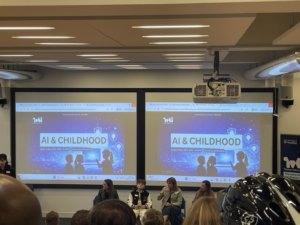
Recently, I was speaking with a few young people about exam season, and many shared how nervous they were feeling about upcoming GCSEs and assessments. What stood out to me was how honest they were. Even students who had prepared diligently still felt anxious.
I think that is something we need to acknowledge more openly.
Nerves are real.
Feeling nervous before exams does not automatically mean you are unprepared, unintelligent, or incapable. Sometimes it simply means you care, you are under pressure, or you are carrying expectations from school, society, culture, family, peers, or even yourself.
Yes, exams do not define your worth, identity, or future. They are one part of your journey, not the whole story.
But while preparing for them, it is still important to be strategic within the system and give yourself the best chance possible.
I also want to acknowledge something important.
There are many people who did not enjoy or do exams and still went on to thrive in careers, business, entrepreneurship, creative industries and many other areas of life. I genuinely love hearing those stories because they encourage young people who may feel discouraged by traditional academic systems.
However, one thing that is often missed in many of those stories is that, over time, people usually built systems, habits, strategies, support networks, and environments that helped them thrive in ways that worked for them.
That same mindset can still apply to GCSEs and exams generally.
As adults, I also think we need to be careful with the narratives we push around exams. Sometimes young people hear “exams don’t matter” as “there’s no point trying at all.”
We can acknowledge the limitations of exam systems while still encouraging young people to give things their best shot.
At the end of the day, many young people will sit for GCSEs and other qualifications whether they enjoy exams or not. Even beyond post-16 education and into adulthood, many people still complete assessments, qualifications, training, interviews, certifications, and professional exams in different forms.
That reality can come with pressure, emotions, expectations, and comparison.
Finding Your Path – It is Okay to Change Direction
Choosing a path when you are young can feel like a decision that will define the rest of your life. But here is the truth – it does not have to. Many people discover their real passion in their twenties, thirties, forties or even later. Some start one career and build another. Some gain qualifications they never use and find that the journey of getting them shaped them in ways they never expected.
What matters is not the speed at which you move, but whether the direction feels right for you. Every step – even the ones that feel like detours – is part of your climb. As author and coach Simon Alexander Ong puts it, “It is far better to be climbing slowly up the right mountain than it is to be climbing fast up the wrong mountain.” So take your time, ask questions, seek guidance, and trust that changing your mind is not a sign of failure. It is a sign of growth.
Some of the most common pathways
Education doesn’t have to follow a single track. These are some of the most common pathways that suit different learning styles, career goals, and starting points, each leading to nationally recognised qualifications. Information is based on the UK government’s official qualification levels framework. Information correct as of 2025/26.
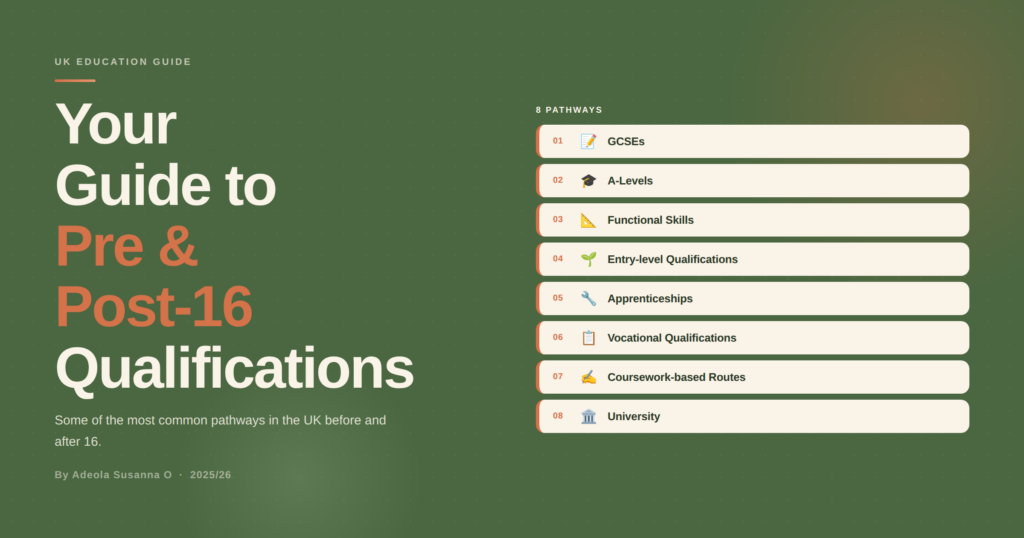
| Pathway | Description |
| 📝 GCSEs | One of the most common qualifications in the UK, covering a wide range of subjects including Sciences, Maths and English. |
| 🎓 A-Levels | In-depth subject qualifications that are the main route into university, typically studied after GCSEs. |
| 📐 Functional Skills | Practical qualifications in English, Maths and Digital Skills, widely accepted as GCSE alternatives. Entry-level science awards are taken along with these. |
| 🌱 Entry-level Qualifications | A supported starting point for building core skills before progressing further. Includes entry-level science from awarding bodies such as AQA, OCR and Edexcel. |
| 🔧 Apprenticeships | Earn while you learn, combining paid work with a formal qualification. STEM routes include, for example, software engineering, cybersecurity, data science, electrical engineering, aerospace and nuclear engineering, with employers such as Google, Amazon, Rolls-Royce and the Civil Service. |
| 📋 Vocational Qualifications | Industry-focused qualifications such as BTECs and NVQs, tied to specific careers. BTEC Applied Science and HNC/HND in Applied Science are popular routes. |
| ✍️ Coursework-based Routes | Assessed through projects and portfolios, great for learners who prefer a non-exam approach. The Cambridge National in Sport Science is a well-known example at Levels 1 and 2. |
| 🏛️ University | Degree-level study is accessible via A-levels, BTECs, Access to HE and more. |
GCSEs are still one of the qualifications young people hear about most at secondary level, so it makes sense that exam season can feel intense.
And if you do not have a formal qualification or simply do not desire to get one right now? That is okay too. For many business, creative and entrepreneurial roles, things like mentorship, work experience, volunteering, building relationships and even reading the right books can open just as many doors. Experience really is one of the best teachers – so find what works for you and go from there.
Not based in the UK? Every country has its own way of recognising learning and qualifications, so it is always worth checking what applies to you. Where possible, your local government website is a good starting point, or simply reach out to someone working in education or in the field you are interested in.
Why It Can Still Help to Give Exams Your Best Shot
Even if exams are not your favourite thing in the world, there can still be value in approaching them intentionally.
You are doing them anyway, especially if you already know you will be sitting them.
Exams can also teach you things about yourself:
– How you respond under pressure
– What environments help you focus
– What revision methods work best for you
– What support you need
– How you manage stress and expectations
This can become useful data for life beyond school.
Sometimes I encourage students to view exams as a small experiment rather than their whole identity.
“What happens if I genuinely try?”
That mindset can reduce pressure while still encouraging effort.
I also often tell students that exams can be viewed as one form of communication. They are one way of showing what you have learnt.
And even if you feel underprepared, showing up and sitting the exam is still an achievement.
Exams are not commonly viewed as places where discipline and character are developed, but for many people, they can reveal the following:
– Perseverance
– Consistency
– Patience
– Resilience
– Commitment
– Endurance
Sometimes growth is happening internally, even when results feel uncertain.
Comparison After Exams
One of the hardest parts of exam season can actually be what happens after the exam.
Many students immediately compare answers with friends and begin spiralling mentally.
If you know you are someone who tends to overthink, protecting your peace afterwards matters too.
Comparison really can steal joy.
Encouragement

To every young person currently preparing for exams:
I know this season can feel heavy.
I know some of you feel confident, while others feel overwhelmed.
But your worth is not hanging on a grade boundary.
Years from now, this season will be part of your story, not the full definition of who you are.
And even through revising, trying, showing up, and pushing through nerves, many of you are building resilience, discipline, and character in ways you may not even fully realise yet.
Please also remember that everybody learns differently.
Some of the advice people give during exam season may not be your cup of tea, and that is okay too.
Over time, you can build your own toolkit, rhythms, and strategies that help you navigate seasons like this in healthier and wiser ways.
And if you know young people currently sitting exams, please continue to encourage them, pray for them, check in on them, and remind them that they are more than a grade.
What genuinely helped you during exam season, and what do you wish someone had told you at the time?
Discover more from Thrive Beyond Labels
Subscribe to get the latest posts sent to your email.