In my last post, I talked about grades: what they are, what they are not, and why a mark on a page will never tell the full story of a young person’s potential. If you have not read it yet, I would encourage you to start there.
Your Grades Do Not Define You: Education Beyond the Classroom – Thrive Beyond Labels
Once we accept that grades are not the whole picture, a natural question follows: so what else is there? I am speaking particularly to parents and carers here because you have more influence in this than the school system has ever fully acknowledged.
What “Education Beyond the Classroom” Actually Means
I want to be clear from the start: this is not a buzzword. It is a recognition of something that has always been true that human beings learn in multiple ways, in multiple contexts, across their entire lives.

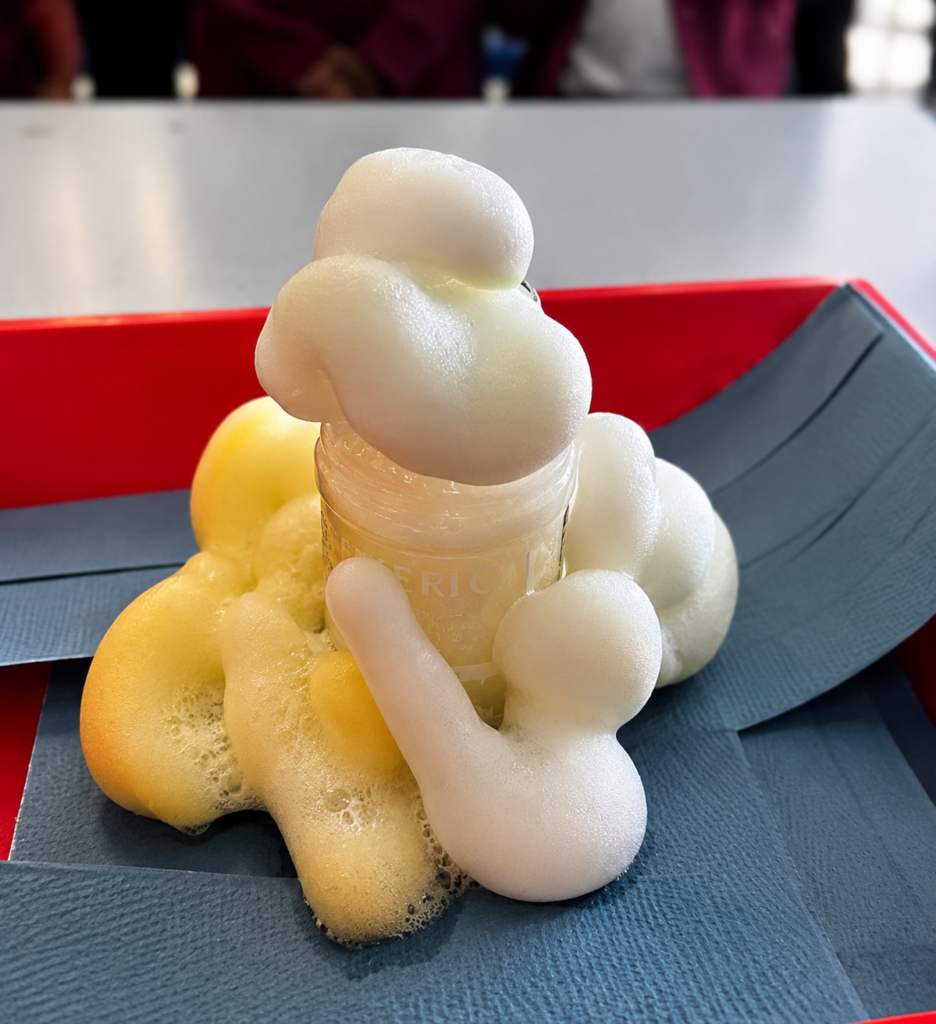
Education beyond the classroom is the dinner table conversation about how medicine works, sparked by a news story. It is the trip to a science museum that makes a concept suddenly click after months of it not making sense in a textbook. It is the cooking session where a young person unknowingly learns about chemical reactions, temperature, and the science of emulsification just because someone took the time to explain what was actually happening in the pot.
It is the youth club where a teenager asks a question they would never feel comfortable asking in a classroom of thirty. It is the community mentor who shares their journey without dressing it up. It is the parent who says “I don’t know; let’s find out together” instead of deflecting.
John Dewey, one of the most influential educational thinkers of the twentieth century, argued that education is not a preparation for life; it is life. Learning happens through doing, through experiencing, through reflecting. That idea feels more relevant now than it ever has.
And it is one that Maya Angelou lived and breathed. A writer, poet, and educator, Angelou championed students to stand out, take a position, and search for truth rather than sit on the fence. She modelled curiosity and courage in everything she did, and she understood that real learning is not passive. It is active, personal, and often happens in the most unexpected places. That spirit is exactly what education beyond the classroom is about.
A wonderful example of this in practice is Science with Manny, an educator who brings science experiments into everyday settings, including the garden, to show young people that you do not need a laboratory to be a scientist. A plant, some soil, a question, and a willingness to try are enough to start. For students who find the formal science classroom environment difficult, or who have not yet had the chance to see themselves as scientific thinkers, watching someone conduct an experiment at home can be the spark that changes everything. It makes science feel accessible, relevant, and genuinely exciting.
This is something I actively encourage in my own work with secondary students. Whether it is trying a simple experiment at home, learning a new language, picking up a new skill, or simply following a thread of curiosity wherever it leads, I want the young people I work with to see learning as something that belongs to them, not just something that happens to them in a classroom. The national curriculum aims for this too. But the honest reality is that when schools are moving through content at pace just to reach the end of a scheme of work, there is very little room to consistently nurture that kind of open, exploratory thinking. That is why what happens beyond the school gates matters so much, and it is at the heart of the confidence and science support I offer to secondary students.
A Gentle Word to African, Caribbean and other Global Majority Families
I want to say something here with love because I am speaking as someone who has lived this, not from the outside looking in.
In many African, Caribbean and other global majority households, education is sacred. It represents sacrifice, hope, and a belief that the next generation can go further than the last. That is something I deeply respect and carry with me.
But sometimes, because of that same love and desire to secure a better future, there can be a strong focus on grades and academic achievement, while extracurricular activities, school trips, workshops, the Duke of Edinburgh, youth programmes, and other enrichment experiences may feel less essential. Sometimes it comes down to resources. Sometimes it is simply not knowing how valuable these opportunities can be because many of us were never told ourselves.
I want to gently push back on the idea that these experiences are extras. Because they are not.
The Education Endowment Foundation (2021) found that high-quality enrichment activities have a measurable positive impact on both academic outcomes and wellbeing, particularly for disadvantaged pupils. These are not distractions from the real work. For many young people, they are the thing that keeps them engaged, builds their identity, and gives them the confidence to show up more fully even inside the classroom.
Science clubs. Cultural trips. Community programmes. Spaces where your child can ask questions they would not raise with a teacher. These things matter. And your child deserves access to them.
The Skills the World Is Actually Asking For
The World Economic Forum’s Future of Jobs Report (2023) identified the skills most in demand by 2027: analytical thinking, creative thinking, resilience, curiosity, self-awareness, and lifelong learning. Notice what is not on that list: memorising a mark scheme or performing under exam conditions once a year.
These skills are built through experience, through being challenged and recovering, and through spaces where asking questions is celebrated and getting it wrong is part of the process. In an age where AI can retrieve any fact in seconds, the human qualities critical thought, emotional intelligence, creativity, and persistence become more valuable, not less. And they are not developed by staring at a revision guide. They are developed through living, exploring, and being given room to grow.
To the Parents Reading This
I see you. You are carrying a lot, and sometimes the education system can feel like a black box. You are told your child needs certain grades, certain exams, and certain boxes ticked, and it is not always clear how to support them when things are not clicking.
Can I say something gently? Your child has more in them than the system has shown you.
If they are struggling with science or any subject, it may simply mean the content is not being delivered in the way they learn best. They may need more one-to-one time, a different pace, or someone who can explain the same concept in five different ways until one of them lands. That is not a failure. That is just how learning works for a lot of people.
Some of the most practical things you can do that do not cost much at all. Talk about the world with your child, not just their grades. Ask what they are curious about. Let them see you learning something new and persisting through it. Model the relationship with knowledge that you want them to have.
And if your child is neurodivergent – with dyslexia, ADHD, autism, or any other learning difference – please hear this: they are not behind. They are not less. They may simply need a different environment or approach. The right support can shift everything. I have seen it not as a theory but sitting with young people who had been written off and watching them come alive when they were finally met where they were.
You do not have to navigate this alone.
Jeremiah 29:11 says, “For I know the plans I have for you, plans to prosper you and not to harm you, plans to give you hope and a future.” I hold onto that. And I believe it is true for every young person who has ever been made to feel like the system is not for them. The plans are still there. The future is still there. It just might look different from the path everyone else seems to be walking, and that is absolutely fine.
Education beyond the classroom is not something that happens accidentally. It is a choice to see a young person as a whole human being rather than a set of predicted grades. To invest in their curiosity, their confidence, and their character, not just their results.
The school system will do what it can. But it was never meant to do everything. The young people who thrive are usually the ones who have something or someone beyond those four walls helping them grow.
My prayer is that every family reading this feels a little more equipped and a little more certain that there is a way forward for their child and for themselves.
Because there is. There really is.
This is part of an ongoing series on education, learning, and supporting young people. Look out for the next post.
References
Education Endowment Foundation (2021) Extracurricular Activities and Pupil Outcomes. London: EEF. Available at: https://educationendowmentfoundation.org.uk (Accessed: 5 May 2026).
World Economic Forum (2023) Future of Jobs Report 2023. Geneva: WEF. Available at: https://www.weforum.org/publications/the-future-of-jobs-report-2023/ (Accessed: 5 May 2026).
Discover more from Thrive Beyond Labels
Subscribe to get the latest posts sent to your email.