I want to begin by being honest and grounded, not just in research, but in lived experience.
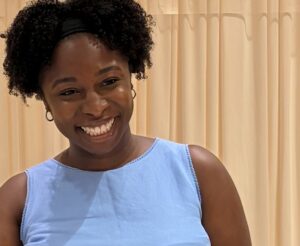
I’m a Black woman science educator. I’ve spent years in and around the education system – as a teacher and, long before that, as a student trying to figure out where I fit in. Growing up as a Black African girl in Britain, I was navigating a system that wasn’t always built with someone like me in mind. It wasn’t until my final year at university – after years of hard work, late nights, anxious thoughts, doubts and pushing through – that I finally had the language to understand the way my brain had always worked.
That moment didn’t change who I was. But it confirmed something I had felt for a long time: the way I learn was never wrong. It was just different. And for years, I was in a system that didn’t quite know how to see it.
I’m sharing this from lived experience – not from a distance, but from within it. And that shapes everything about how I show up for the young people I work with.
The System We Inherit
Most of us in the UK – and many across the world – follow the same educational pathway. Primary school, secondary school, GCSEs, sixth form or college, maybe university, and then work. It is the blueprint we are handed almost without question – and for generations, it has been presented as the route to a good life.
And to be fair, there are real strengths in that structure. Education has been one of the greatest equalising forces available to young people who do not come from inherited wealth or privilege. For many families – including African and Caribbean families who came to this country with enormous hope and enormous sacrifice – education was the dream. It was the way through. And I do not take that lightly. I honour that.
But there is also a conversation we need to have. Because the same system that can open doors can also, if we are not careful, make a young person feel like a failure before they have even really begun.
Recent research from the Education Policy Institute (2024) shows that attainment gaps remain wide and, in some cases, are the largest in over a decade, with disadvantaged pupils falling significantly behind their peers as they progress through the education system.
Relying too heavily on high-pressure exams as the dominant way to define success can marginalise a wide range of learners, especially those who are neurodivergent, from disadvantaged backgrounds, or whose abilities are not reflected within narrow, conventional assessment methods.
If that sounds like your child, or if that sounds like you – I want you to know something. You are not behind. You are not broken. You may simply be someone the system has not yet learnt to fully see.
Grades Are a Snapshot. Not a Verdict.
This is one of the things I feel most strongly about, and it comes directly from my own experience.
I sat in science classrooms as a young person who was working twice as hard as some of my peers just to process and organise information – without knowing why. I got through. I achieved it. I became a science teacher. But I also know what it felt like to wonder if I was clever enough, capable enough, or built for this.
And so over the years of engaging with students – whether standing at the front of a classroom or sitting with someone in a 1:1 setting – I do not start with the syllabus. I start with the person.
A GCSE grade is a snapshot of one performance, on one day, in one set of conditions. It is not the full picture of your potential. It is not a verdict on your intelligence. And it is absolutely not a ceiling.
The GCSE subject selection process often asks young people to make choices that feel permanent when they are anything but. Most of us – I promise you – have pivoted. Changed direction. Discovered entire parts of ourselves well into our twenties, thirties, and beyond.
I have watched students who genuinely struggled with science in secondary school – through practice, encouragement, and finding the learning style that actually worked for them – become more confident, more self-aware, and more willing to work on their areas for growth. Because they had someone sincerely in their corner, cheering them on without an agenda. Some of those students have gone on to higher education. Others have moved into roles that genuinely fuel their desire to contribute, to offer something, to make a difference. Not because they suddenly became different people. But because they were finally met where they were.
I have also seen something that stays with me: students who began to make real-world connections with what they were learning. Who stopped seeing science as abstract and started seeing it everywhere. Understanding how chromatography works and connecting it to their love of art and colour. Using their creativity to map out how the circulatory and digestive systems function in ways that made it stick. Grasping the role of insulin in regulating blood sugar – not as a diagram on a page, but as something relevant to people they love. Discovering the actual science behind baking and cooking and realising it had been part of their lives all along.
Those students were not just working toward a grade. They were curious. They were asking questions that went beyond the mark scheme. They were learning to think – not just to reproduce. They were doing hands-on practicals in the lab and at home to get a deeper feel for concepts, whether they were on the curriculum or far outside of it. And that kind of learning does not leave you. It builds something.
What the Science Classroom Can Be
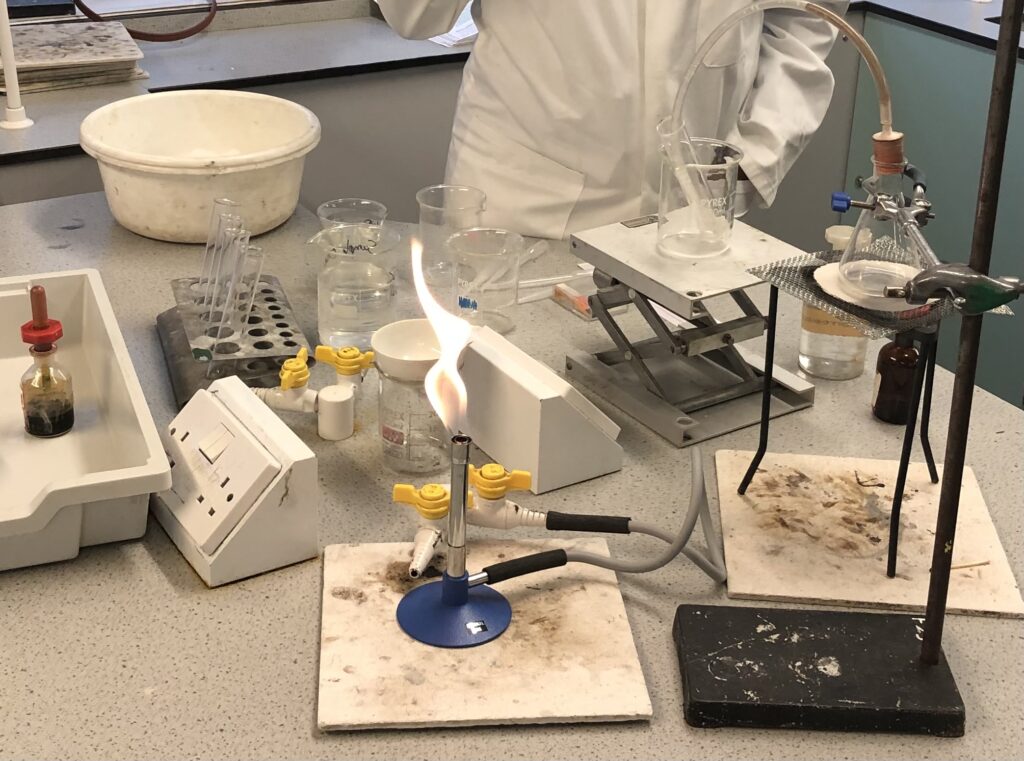
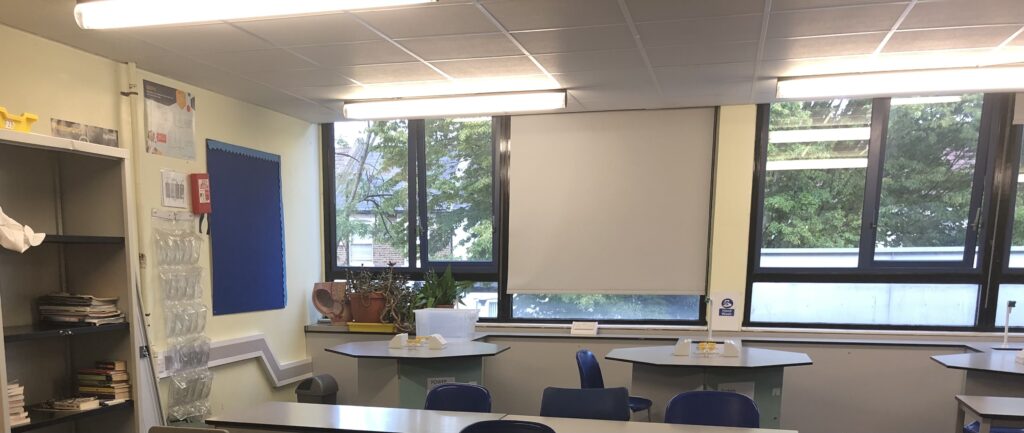
I specialise in science – and I want to speak specifically to secondary students and their parents here, because science is one of those subjects that carries a lot of weight and, for many students, a lot of fear.
Science gets a reputation for being hard. For being only for “certain types of people”. For requiring a specific kind of mind. I have heard students say they are not science people before they have even really given themselves the chance to find out.
But here is what I know from years inside science classrooms: science is inherently about curiosity. It is about asking questions, testing ideas, being wrong and trying again. A practical experiment is not just about getting the right result – it is about critical thinking, problem-solving, and discussing why something did not go as expected. Those skills do not disappear when the lesson ends. They transfer into every area of life.
The issue is not usually the subject. The issue is how it is being presented and whether the student feels seen and supported inside the learning space.
For neurodivergent learners especially – students with dyslexia, ADHD, autism, and other learning differences – the classroom environment can feel overwhelming, rushed, or built for someone else. And when you are spending all your energy managing that environment, there is very little left over for actually engaging with the content.
The Department for Education (2022) highlights the need for improved support for neurodivergent learners within mainstream settings, calling for more flexible, personalised approaches.
More flexible. More personal.
That matters. Because when a young person is given the right environment – one where they feel safe enough to ask questions, move at a pace that works for them, and understand the why behind what they are learning – something opens up. I have seen it. Again and again.
To the Student Reading This
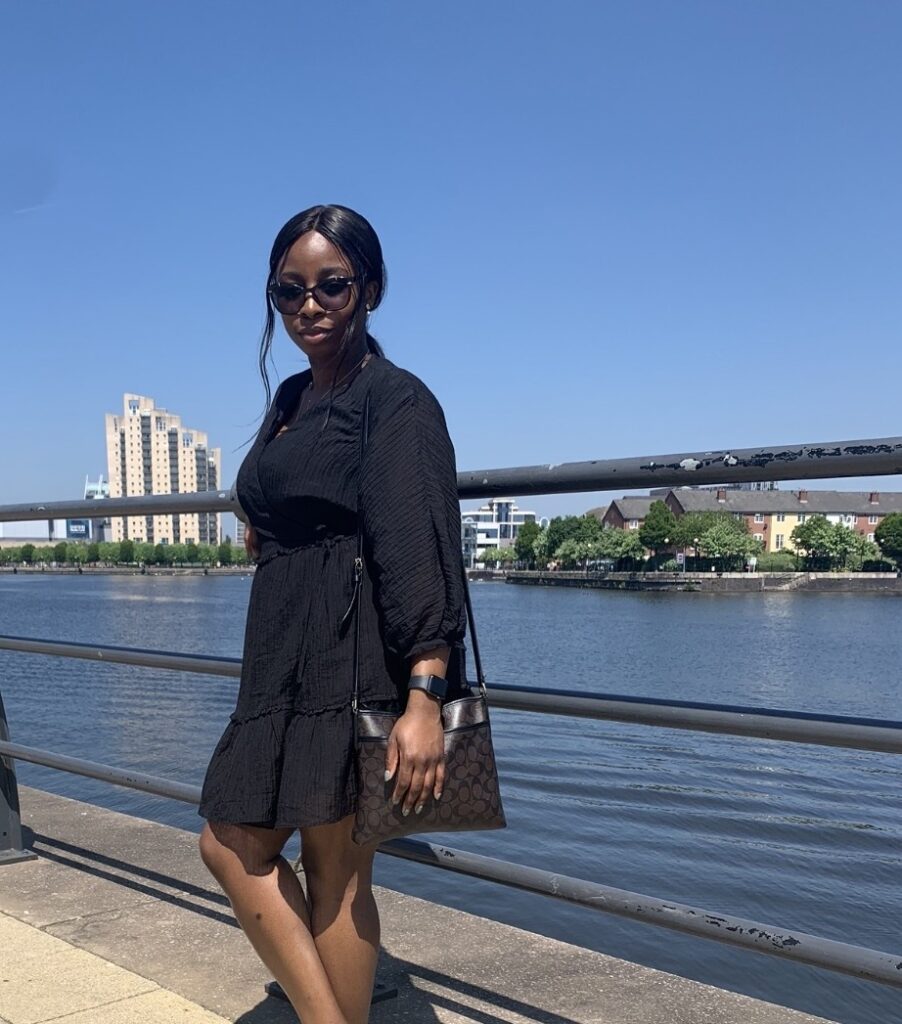
If you are a secondary student reading this – maybe because your parent shared it, or maybe you found it yourself – I want to speak to you directly.
You are not too far behind.
You are not stupid.
You are not a lost cause because science feels confusing, or because you have to read something three times before it sticks, or because your brain works differently from the person’s sitting next to you.
Some of the most brilliant scientists, engineers, and thinkers in history were people who did not fit the mould. Who struggled in traditional classrooms. Who were told – explicitly or implicitly – that they were not built for this. And they went on to change the world anyway.
Your story is not over. In fact, for many of you, it is just beginning.
There is hope here. Real, grounded, practical hope – not just as a feeling, but as a direction. And you deserve support that actually meets you where you are.
Your grades are not the final word on who you are or what you are capable of. They are one piece of information – useful but incomplete. The most important thing is not the number on the page. It is whether you are growing, whether you are curious, and whether you have people around you who genuinely believe in you enough to help you get there.
My prayer – genuinely – is that every young person reading this knows that there is a path forward. And that the right support, in the right environment, can change everything.
Because I have seen it. And I believe it.
Next in this series: Education Beyond the Classroom – what it actually means, why it starts at home, and what parents can do to support their child’s growth beyond the school gates.
References
- Education Policy Institute (2024) Annual Report 2024: Disadvantage. Available at: https://epi.org.uk/publications-and-research/annual-report-2024/ (Accessed: 29 April 2026).
- Department for Education (2022) SEND Review: Right Support, Right Place, Right Time. Available at: https://www.gov.uk/government/publications/send-review-right-support-right-place-right-time (Accessed: 29 April 2026).
Discover more from Thrive Beyond Labels
Subscribe to get the latest posts sent to your email.